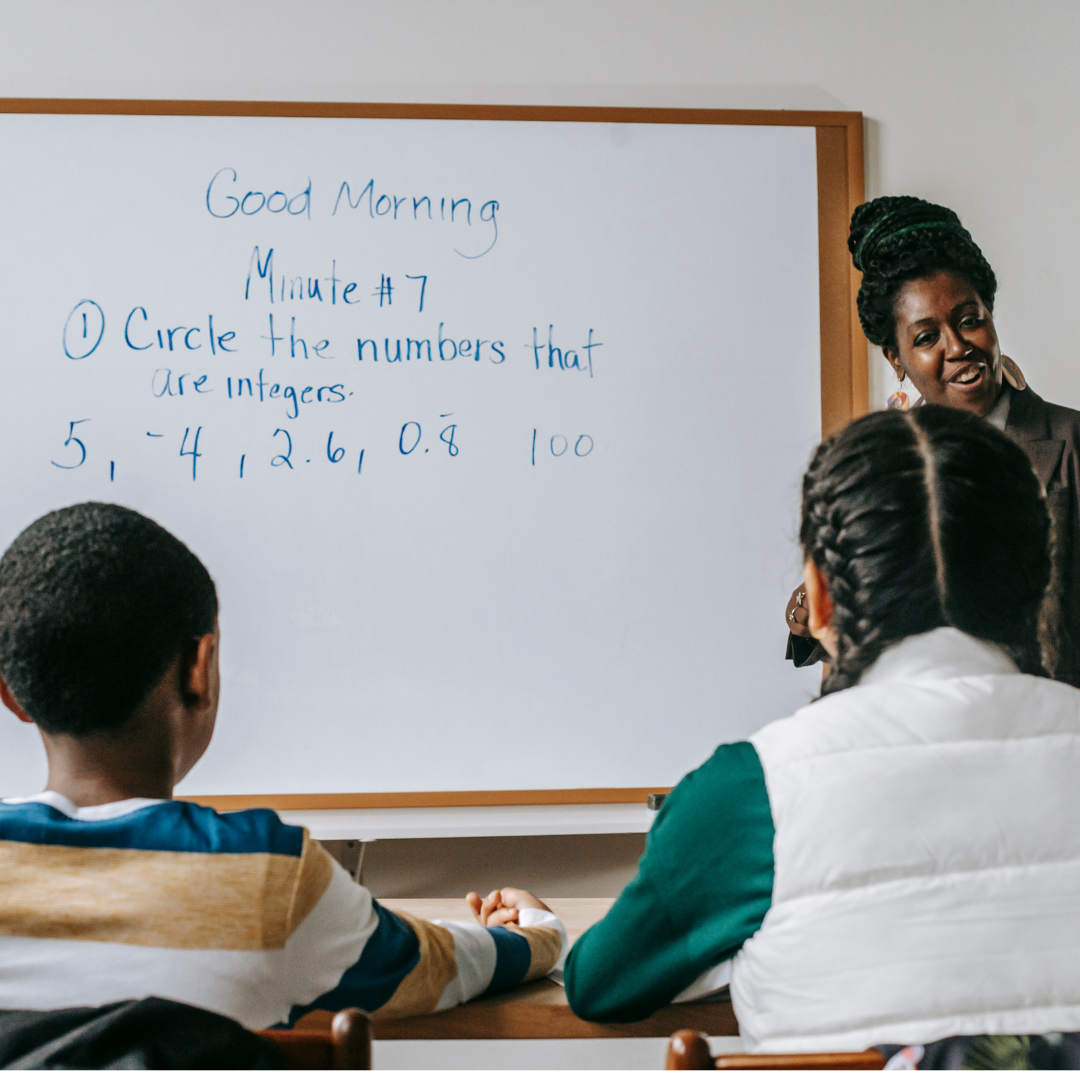
round numbers are one of the fundamental concepts in mathematics. They're numbers that don't have floating components or decimal components and they cover positive numbers, zeroes and negative numbers. In everyday life and various branches of science, integers play an important role, especially in basic arithmetic operations such as addition, reduction, multiplication and division. This article will cover the definition of the integer, the valid operations, and some of its applications.
The integer is a number that belongs to the following set:
In this set, we have three types of numbers:
Geometrically, the integer can be represented at the number line with a negative integer position on the left of zero and the positive integer on the right of zero.
Round numbers support various basic arithmetic operations. Here are the basic operations that apply to integers:
The sum of two integers involves adding or reducing its value by the number sign. The basic rule of addition is:
Example:
Reductions can be considered as addition to the opposite of the given number. Reduction rule:
Example:
Multiply integers follow simple sign rules:
Example:
The division of integers also follows the same set of marks as multiplication:
The integer division can produce integers or fractions depending on the outcome. For example:
However, if the division is exhausted, the result can be fractions or decimal numbers.
Round numbers and operations have some very important properties, which is:
The terms of the round and operation are very important in various applications of daily life and science. Some examples include:
Round numbers are the main foundation in mathematics that underlies many basic arithmetic operations. They include positive, negative, and zero, and they play an important role in addition, subtraction, multiplication and division. The profound understanding of integers and operations is paving the way for mathematical applications in various areas of science and daily life.
source: Larson, R. & Edwards, B. H. (2018). Cengage Learning.