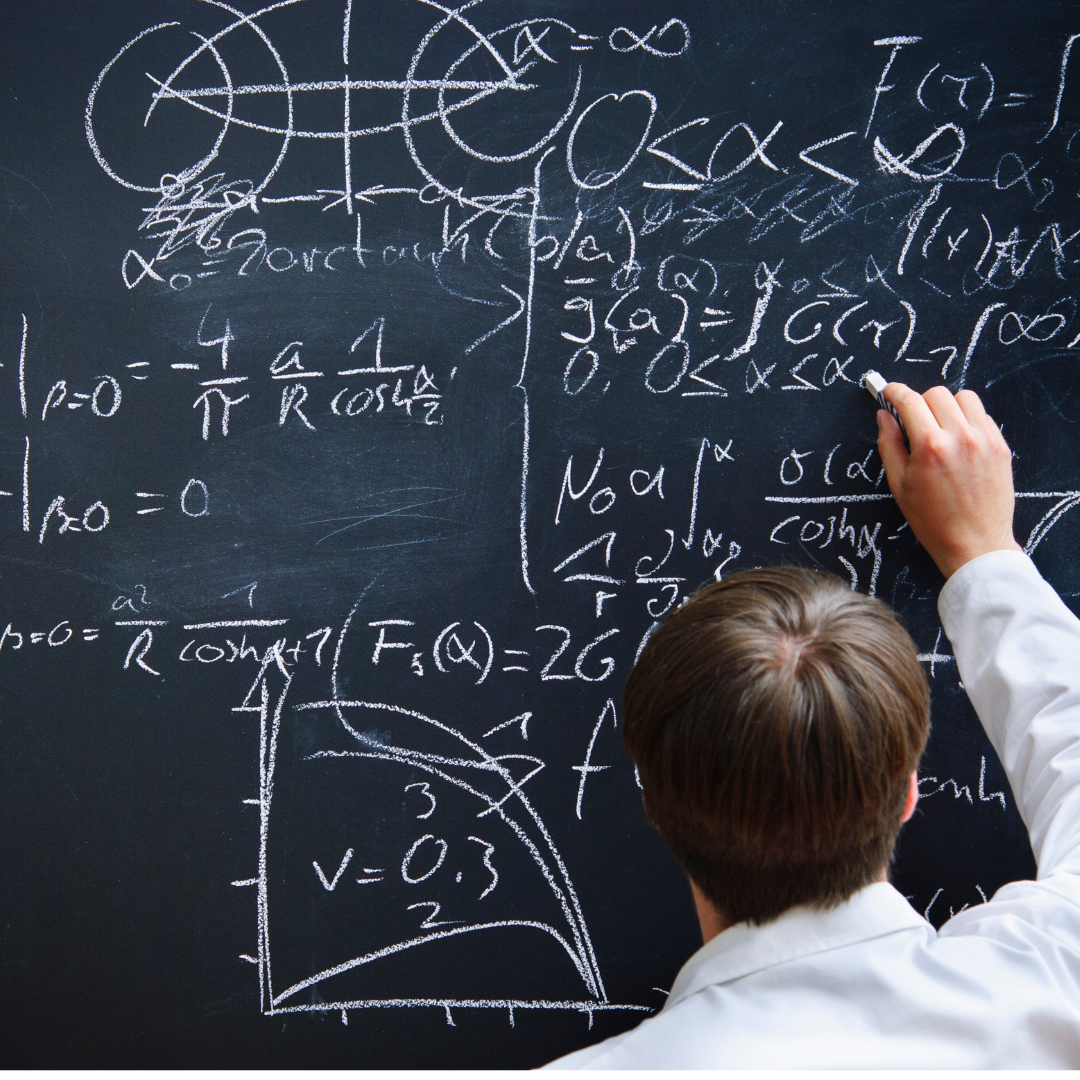
Mathematics is often referred to as a universal language because of its ability to describe and explain phenomena in all aspects of life and the universe. From planetary movements to social patterns, from technological development to biological processes, mathematics allows us to understand complex systems. It's a language that transcends cultural differences, languages, and even time. This article will explain why mathematics is considered a universal language and how it's used to understand the world around us.
One of the main reasons why mathematics is referred to as a universal language is because of its ability to describe the laws of nature. The laws of gravity Newton, Relativity Theory Einstein, and Termodynamics Law is an example of how mathematics is used to describe physical phenomena accurately. Math provides tools that allow scientists to model the movements of celestial objects, the properties of subatomic particles, and many more. By using mathematical equations and formulas, we can understand and predict how nature works, from macroscopic scales such as planetary movements to microscopic scales such as quantum particle behavior.
Even in fields like biology, which are often considered far from mathematics, we use mathematical models to describe population dynamics, spread disease, and evolution of species. The differential equation and probability theory is an important tool in modeling ecology and studying the dynamics of the biological system.
Mathematics is also the basis of modern technology. Every technological innovation, from computers to smartphones, from Internet to artificial intelligence, was built on mathematical principles. In computing, mathematical algorithms are used to process data, solve problems, and make decisions. Cryptography, a mathematical branch used to secure digital communication, very important in maintaining privacy and security information in the current digital era.
In artificial intelligence and machine learning, mathematics plays a major role in analyzing data and making predictions. Statistics, linear algebra, and calculus are used to train AI models that can recognize patterns, process natural language, and even auto-drive. Mathematics allows us to develop technologies that not only make life easier, but also bring innovation that advance civilizations.
One unique aspect of mathematics is that it's cross-cultural. Mathematical symbols like numbers, plus signs, equations, and others used and understood by people all over the world, regardless of their language or culture. This means that a mathematician in Japan can understand the work of mathematicians in France or the United States just by looking at the same mathematical equation.
Besides, mathematical development is not limited by the different ages. The mathematical discovery done by ancient mathematicians like Pythagoras, Euclid, and Archimedes Still relevant and used to this day. The basic concepts such as geometry, algebra, and calculus continue to be the foundation of modern science and technology, which proves that mathematics is a language that is eternal and cross-generative.
Besides being used in science and technology, math also plays a crucial role in everyday life. We use math to manage finance, to plan travel, to measure time, and even simple activities like cooking. From counting discounts in stores to making budgets, math helps us make better and more rational decisions.
In the business world, math is used to project profits, calculate risks, and determine the price of products. In health, mathematics is used to predict the spread of diseases, calculate the proper doses of drugs, and analyze the results of clinical research.
Mathematics is a universal language that transcends language boundaries, culture and time. With his ability to describe the laws of nature, support the innovation of technology, and help us in everyday life, mathematics continues to play an important role in understanding and developing the world around us. As critical and analytical thinking tools, mathematics helps us answer big questions about the universe and create solutions to future challenges.
source: Stewart, I. (2012). The Great Mathematical Programs. Profile Books.