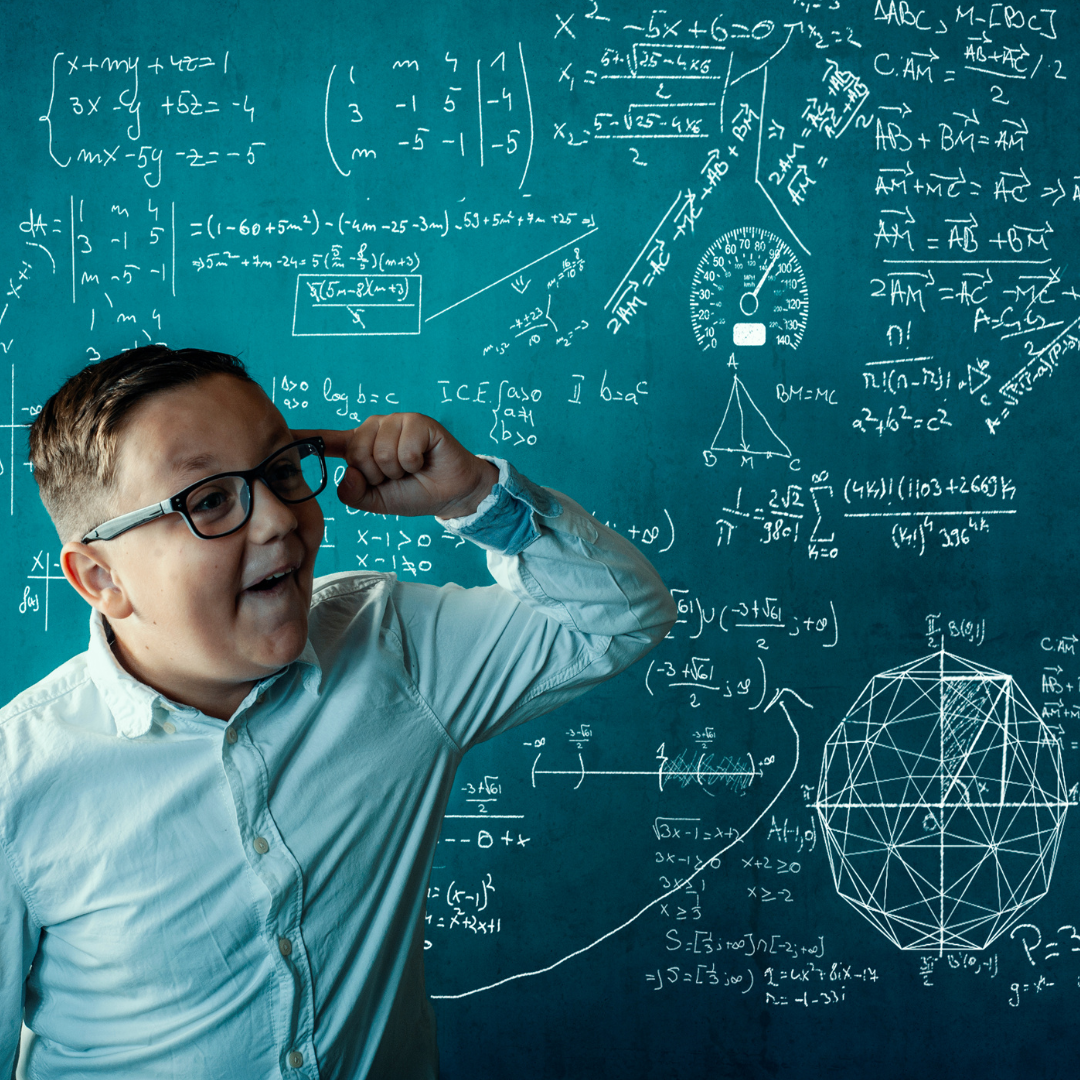
In this modern age, mathematics is no longer seen as science that only deals with simple calculations, but as a universal language underlying many technological innovations. Building a future with mathematics is a must for young people who want to succeed in an increasingly complex digital era. Mathematics is essential in developing critical thinking skills, solving problems, and understanding complex concepts that become the foundations of different fields, such as artificial intelligence, science data, to digital economies.
In the world of technology, mathematics is the key in the development of artificial intelligence. Algorithm used in the AI system, such as image recognition and processing natural languages, is based on mathematical concepts such as linear algebra, probability and statistics. For example, the duplicate neural network used in machine learning works with a very complex mathematical model. Without a good understanding of mathematics, it's impossible to understand or develop these advanced technologies.
Besides, in the great era of data, the role of data is getting more important. Mathematics is the foundation for data analysis, with statistics and probability of large role in processing and interpreting very large and diverse data. A strong understanding of mathematics allows data scientists to make an accurate and effective data-based decision, something that companies all over the world desperately need to keep competitive.
Mathematics not only helps understand technology and data, but also increases the ability of solving problems. In everyday life, we are often faced with situations that require quick and precise solutions. Critical thinking skills developed through mathematical learning help us look at problems from different points of view, find logical solutions, and minimize error.
In education, the solving problem skills that are obtained from math learning help students prepare for future challenges. Studies show that students who have strong mathematical basics tend to be more successful in their professional careers, especially in the field of technology, economics and science. This ability is also important to those who want to innovate and create new solutions to global problems.
However, despite its importance, math learning is still a challenge for many students. Many students find it difficult to understand abstract concepts in math. It demands innovation in math teaching methods to be more fun and relevant to everyday life.
One of the emerging solutions is the application of technology in math education. Interactive learning applications, online learning platforms, and the use of gamification in learning have been proven to help improve the student interest and understanding of math. With the help of technology, students can learn math in a more fun and interactive way, as well as getting real-time feedback.
The future belongs to those who master mathematics. In this digital age, the ability of mathematics is not only needed by those who are dabbling in technology and science, but also by everyone who want to succeed in the work world. Mathematics provides us with logical thinking skills, data analysis skills, and the necessary problem solving skills in different areas.
By continuing to develop mathematical education and emphasize its relevance with real life, we can make sure that future generations are ready for future challenges. With mathematics, the future is full of innovation and advancement technology can be realized.
source: Bhatia, V. (2021). Mathematics in the Era of Data Science and AI: