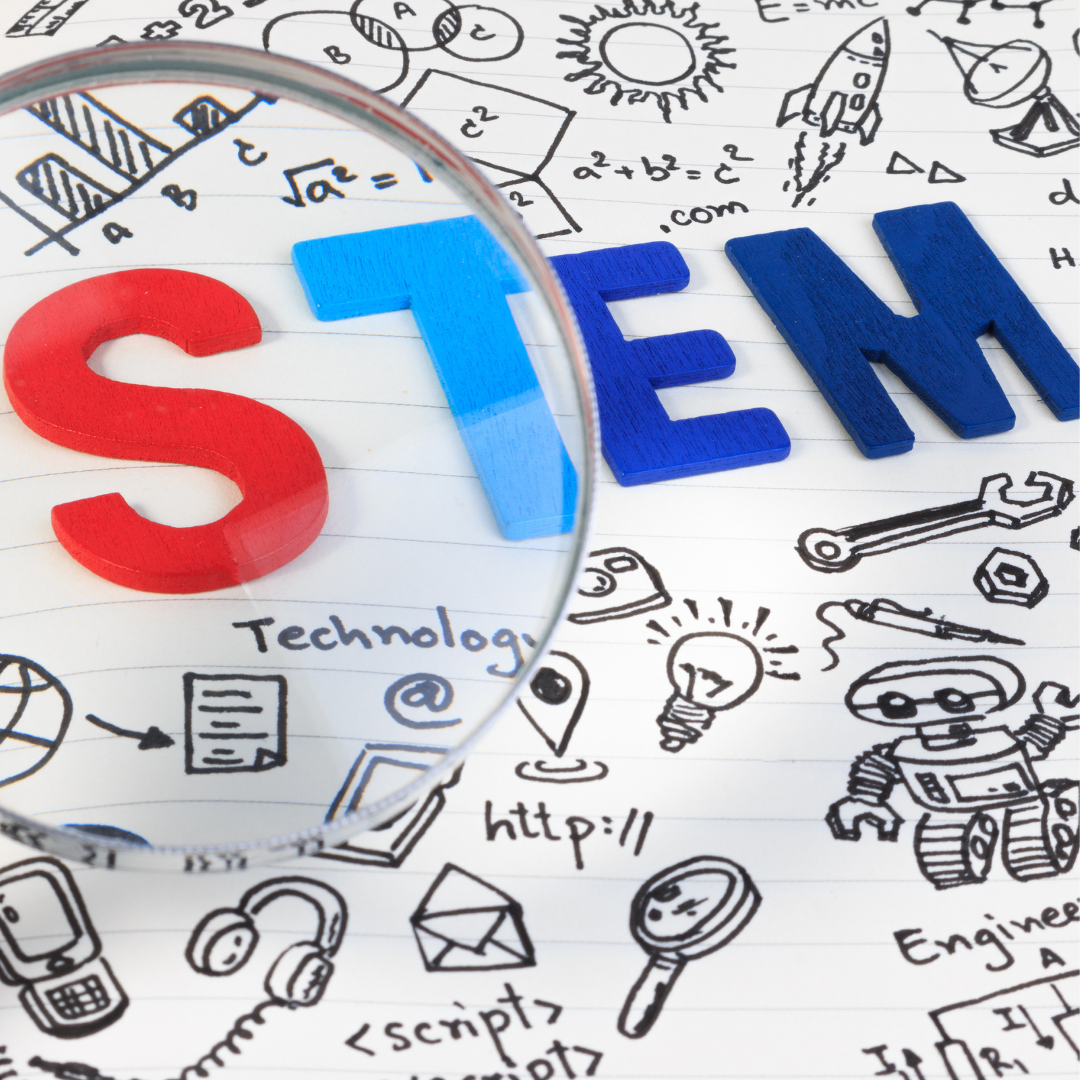
In today's technology era, the STEM literature.Science, Technology, Engineering, Mathematics) became the key to the progress of education, economics, and development of innovation. Among the four pillars of STEM, mathematics acts as the main foundation that sustains any other discipline, helping in understanding science, technology design, and engineering applications. Mathematics is not just math; it's a universal language that allows people to think critical, interpret data, and make evidence-based decisions.
This article will strip how the mathematical roles integrate the S.T.T.E.M. components, its benefits for the development of the STEM literature, as well as the importance of forming a skilled generation ready to face global challenges.
Mathematics is often referred to as "the language of science" because concept- the basic concepts like numbers, geometry, and statistics become the basis of understanding in science, technology and engineering. In the field of science, mathematics allows scientists to model natural phenomena, make predictions, and test hypothesis. For example, in physics, mathematical equations explain the laws of motion and gravity, allowing scientists to estimate the behavior of objects in various conditions.
In technology, mathematics underlying the development of algorithms, which is the core of current digital technology, like artificial intelligence and data processing. In engineering, mathematics is a role in design and simulating structure, materials endurance calculations, as well as the development of safe and efficient machines.
According to the National Research Council report, math acts as the basis of analysis and understanding in any STEM discipline, which then increases the ability of STEM literacy students to think analytically and logically in solving the problem of mathematics increasing the ability of Critical Thinking.
In STEM education, mathematics is known as one of the most effective tools to train critical thinking skills and problem solving. Critical thinking abilities allow students to evaluate problems, analyze data, and conclude the correct solution. Through math, students are taught to break complex problems into simpler steps, then solve them with a logical approach.
In the age of data and information, critical thinking is also very useful in judging information source credibility and analyzing quantifiable data in various areas, including health, economics and environment. This ability is not only relevant in the classroom but also in everyday life, especially with a lot of information that needs to be interpreted critically in modern life.
Studies from Partners for 21 st Century Skills It shows that students who are good at math are more likely to have better critical thinking skills, which is one of the main components in the STEM literature.
In the increasingly digitized world, math is part of developing important technological skills for students' future. For example, the knowledge of algebra and algorithms became the basis of computer programming, which in turn became a very sought-after skill in the working world today. Programming also encourages students to develop logical and analytical abilities.
Moreover, mathematics is the core of data technology, such as big data analysis and machine learning, which both supports innovation in various industries, including health, finance and transportation. With powerful mathematical literacy, students can utilize data to produce profound insights, model trends, and make valuable predictions for industrial progress.
Research published in Journal of Research in STEM Education It shows that math has a significant influence on improving the technology skills of students in the STEM-based education environment, especially in data analysis and programming.
STEM literation requires understanding cross-discipline that can be facilitated by mathematics. This collaboration between disciplines can be achieved by a common mathematical language. For example, in a STEM project that combines science and technology, the ability to use data, statistics and mathematical models to allow teams to speak in the same "language" and unify insight from various views.
Stem learning programs that encourage collaborative projects to often use mathematics as a medium to connect ideas of various disciplines, which allow students to practice concepts such as statistics in scientific experiments or geometry in technical design. This reinforcement is not only helping in developing STEM literature but it's also training students to collaborate in an increasingly disciplined working environment.
Today, many of the global challenges such as climate change, energy and health problems need a STEM-based solution. In the issue of climate change, for example, climate data that's been processed and modeled with mathematical equations helps scientists understand patterns and estimate the impact of human actions on the environment.
Moreover, the understanding of epidemiology and public health is also very dependent on mathematical mastery. Through statistics and data analysis, mathematics allows scientists to predict the spread of disease and plan preventive measures.
The STEM literation amplified with mathematical abilities allows young people to contribute to solving this global challenge. The study of the World Economic Forum shows that the skills of STEM with strong mathematical grounds are indispensable to encouraging sustainable and responsive innovation to global change.
Set the central role in strengthening the STEM literacy by providing the basis of logical and analytical thinking, technology skills, and the ability to collaborate in the cross-disciplinary projects. Stem-based literacy not only enhances science, technology and engineering, but also prepares students to face real world challenges with innovative solutions and evidence-based solutions.
In the face of the 21st century's challenges, it's important to provide students with strong STEM literacy so that they're ready to compete and contribute positively to the progress of the world. With deep education in math as the foundation of STEM, future generations will be ready to lead changes through knowledge and innovation based on data.
Source: National Research Council. (2012). A Framework for K-12 Science Education: National Protests Press.